Wednesday, 3 July 2019

TIPS FOR GOOD READING

Good Reader Strategies

Good readers engage in self-questioning before, during and after reading to monitor their own comprehension, and to integrate readings with prior knowledge.

Before reading
- preview the book :
   - what kind of a book is it, (fiction or non fiction?)
   - Does it have any illustrations and what kind?
   - does it have any headings and are they attractive? is it the kind of book you are curious about or do you want to throw it out?
- Set the purpose of reading. (exactly why are you reading the book?)
- Think about which strategies might work best for your kind of book

While you are reading 
- ask yourself is the text makes sense
- ask yourself if it sounds right
- Focus on beginning sounds and endings to figure out unknown words
- Backtrack when the meaning isn't clear
- Read on past difficult words or groups of words to get more information
- Confirm or correct your predictions

After reading 
- think about what the author was writing
- reflect on how the text matched or did not match your predictions
- think about how the text relates to real life

What strategies work for you?

Wednesday, 20 March 2019

EARLY COMPREHENSION

While working with the community schools, one of the key things we have noted is how children are not able to read and comprehend simple stories. This is a problem because it will affect them not only now but in the future as well.  One of the resources available in the INSPIRE library is the book highlighted below that helps our library attendees with their reading comprehension.


lets first understand Comprehension.

As Rutzler, Sarah put it in her article , 'the importance of reading comprehension,'  many children can read, but reading comprehension and reading are two different things. While reading involves translating and decoding text into sounds and spoken words, reading comprehension involves taking what was just read and deriving meaning from those words meaning that comprehension is basically the ability to read, understand , process and recall what was just read.

Can your children read and recall? How do we help them, can simple exercises in the classroom and school setting help?

WAYS TO HELP WITH COMPREHENSION

1. While at home, tell your children stories then ask them questions from the story
2. Ask children, their thoughts before , during and after reading the story. For example, if it is a book with an illustrated cover, ask them what they see. What does the title of the story suggest? did they enjoy the story? 

We have repeatedly told parents that if they cannot communicate with children, reading creates connections. It gives them a platform in which they can work through issues. They could even read content that is in line with the issue they are currently dealing with

Tuesday, 12 February 2019

THE KEY QUESTION - LESSON 2 HABIT 1

EVERY time we teach on leadership to our children aged between 12-16 years old , we always ask, a key question. THE question will always be, What does your name say about you? in most cases, since we know our children's names, we have often called out one or two and almost always with a similar result. There will either be clapping or there will be giggling and whispering with an indication in a certain direction.

A good name is better than gold or silver goes a wise saying. Have we taught our children that their names matter? When you walk into any community, what will your name be saying about you? Will it give you the confidence to stand before a crowd or will you want to run and hide? What values do you want them to have? as a young person what values will your name be associated with?

To lead others you must lead yourself first. This is very fundamental. Because the fact is, you are teh captain of your own ship. How will others respond to you if you cannot take interest in yourself first?
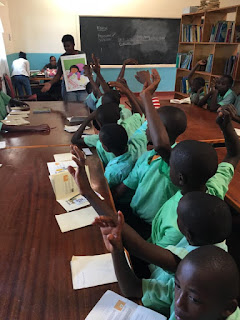
HERE are a few highlights of our lesson

1.Good children have good habits. Habits are behaviors you do repeatedly. They are how you show your character every day. Your habits can produce very good results or not. As you become more better, your good behaviors also grow and develop and you are able to work well with others for example your teachers, other students, your friends etc (quoted from the 7 habits work book)

2. Core values are at the heart of every decision you make, every opinion you develop. They’re an expression of what you believe, and they provide the foundation for your reaction to everything that happens in your lifetime. What do you believe? Maybe you believe that you are smart, your parents love you, you are a good person, and you are generous. Or you might believe bad things about yourself.  I need you to identify your beliefs and let them guide you through life. Remember, they belong to you and you


 and then we proceeded to give them a story that is quite universal in its nature but has very important lessons.

A little steam engine had a long train of cars to pull. 
She went along very well until she came to a steep hill. But then, no matter how hard she tried, she could not move the long train of cars.
She pulled and she pulled. She puffed and she puffed. She backed and started off again.  Choo!  Choo!
But no!  The cars would not go up the hill.
At last she left the train and started up the track alone.  Do you think she had stopped working? No, indeed!  She was going for help.

“Surely, I can find someone to help me, “ she thought.
Over the hill and up the track went the little steam engine. Choo!  Choo! Choo!  Choo! Choo! Choo!

Pretty soon she saw a big steam engine standing on a side track. 

He looked very big and strong. Running alongside, she looked up and said:

“Will you help me over the hill with my train of cars? It is so long and heavy I can't get it over.”
The big steam engine looked down at the little steam engine.   Then he said:
“Don't you see that I am through my day's work? I have been rubbed and scoured ready for my next run.
No, I cannot help you.”
The little steam engine was sorry, but she went on, Choo, choo! 

Choo, choo!  Choo, choo!
Soon she came to a second big steam engine standing on a  
side track.  He was puffing and puffing, as if he were tired.
“That big steam engine may help me, “thought the little steam engine. She ran alongside and asked:
“Will you help me bring my train of cars over the hill?  It is so long and heavy that I can't get over.”
The second big steam engine answered: “I have just come in from a long, long run.  Don't you see how tired I am?  Can't you get some other engine to help you this time?”
“I'll try, “ said the little steam engine, and off she went.  Choo, choo!  Choo, choo!  Choo, choo!
After awhile she came to a little steam engine just like herself.  She ran alongside and said:
“Will you help me over the hill with my train of cars?  It is so long and so heavy that I can't get it over.”
“Yes, indeed!” said this little steam engine.  “I'll be glad to help you if I can.”
So the little steam engines started back to where the train of cars had been standing.  Both little steam engines went to the head of the train , one behind the other.
Puff, puff! Chug, choo! Off they started!
Slowly the cars began to move. Slowly they climbed the steep hill.  As they climbed, each little steam engine began to sing:
“I-think-I-can! I-think-I-can! I-think-I-can! I-think-I-can! I-think-I-can!I-think-I-can! I-think-I-can!I-think-I-can! I-think-I-can!!
And they did! Very soon they were over the hill and going down the other side.
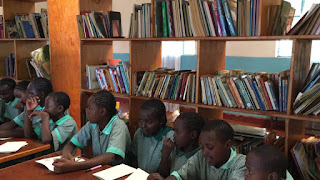
Now they were on the plain again; and the little steam engine could pull her train herself.  So she thanked the little engine who had come to help her, and said good-by.
And she went merrily on her way, singing:
“I thought-I-could! I thought-I-could! I thought-I-could! I thought-I-could! I thought-I-could! I thought-I-could! I thought-I-could! I thought-I-could! I thought-I-could! I thought-I-could! I thought-I-could!--”


We are of the opinion that if a child is taught to think they can , if they can change their mental attitude then they can achieve alot of what they think is impossible. The question however remains, will they? What as parents can we do to help ?

Thursday, 28 June 2018

THE JOY OF GIVING

Learn to light a candle in the darkest moments of someone’s life. Be the light that helps others see; it is what gives life its deepest significance.” 
― Roy T. BennettThe Light in the Heart

Giving can be in so many ways when you take time to think about it. Every day in little ways we are giving of ourselves , in time, love , mind , heart....you name it. It remakes you as a person, it grows you, it gives you a very different outlook on life.

Every day at INSPIRE we are giving. People often walk in there and i can see it in their eyes,..the question of ...., don't you ever get tired? 

Let me explain what it is we do. We meet the community through books, we open their eyes to opportunities and somehow we walk into their lives and somehow over the last 7 years, we have by the Grace of God managed to solve some of their problems. I want to state here , that we don't do it alone. We have awesome partners. The American Friends of Kenya who have faithfully donated books through out our existence. They do back breaking work of searching out books, sorting them, packing them, for all the libraries they support in Kenya and most importantly raise funds to send that shipment to Kenya. God bless them for putting smiles on the children's faces. 

Next we have the Freese Foundation under the Jesus Freese Ministries. They have helped to school quite a number of the children and that is going up. They have brought peace in homes simply because there is hope. They have through their own partners clothed, fed and secured futures of not just the current generation but future generations as well. Belta Delta group that has ensured animal tales will remain alive in our midst.

Then we have all this individuals. I cant even begin to name them.its beautifully overwhelming. They have especially donated books, bought books, given books, given a little piece of themselves through inspire and spread warmth and love in ways they may never think about. 

Back at home we in turn have gone out to the communities, we have said to let the children come. We give when we spread knowledge. It is not just money it is things like wisdom, it is every thing sweet and nice and beautiful thing that only a book can bring. It is the world of imagination that creates future leaders. It is knowledge and it is good

Maybe you are there and you are wondering, how can we help. Well there are many needs that come with having a community library. We need shelves, we need a computer, we have little libraries springing up because our blessing will not be restricted to just one location but spread to many. So we need books. We need chairs , and tables. You could perhaps add a toy or two, make us smile more with some crayons. What makes children happy we would want. Dont let them gather dust , don't let them become relics. Let a child enjoy them and you will be giving a little piece of yourself and help spread the love

check us out on facebook : inspire nyeri kenya

Never get tired of doing little things for others. Sometimes, those little things occupy the biggest part of their hearts.
— Unknown

Tuesday, 22 August 2017

OF SIX GLASSESS AND WHAT EATS US

Every day we meet here in our learning circles, we learn important lessons even we, as adults. I know , that is a very appropriate title. What is eating us?Today all of were asked one question, 

"There are six glasses in a row. The first three are full of water, and the next three are empty. By moving only one glass how can you make them alternate between full and empty?"

I will confirm that this question was not for the children but rather directed towards us adults. Us teachers, us who think we know it all. And as usual there are those among us who ran to answer it quickly, others who were slower and preferred to think longer , others who gave up on the first try.

Lesson learned...our children are different. Our teacher today taught us that we should not let our classrooms be controlled by the brighter children. Yes , those of us who run to answer first were actually right, but because the teacher did not give us that tick just yet, she forced us to think. To think of alternatives. What else could we do about this situation?

Do we ever give our children, even ourselves time to think of alternatives? Are we too quick to give right to those who are right ? Have we ever considered that there are others in the room given enough time will get it right? are we too quick to finish first, complete the curriculum, go ahead of the pack?


Tuesday, 15 August 2017

Of Kenyan libraries and Friends who support them


Great things are done by a series of small things brought together - Vincent van Goh

have you ever thought about how one book can make a difference? How one book can build a nation or inspire a movement? Have you ever thought about how a space in the right place at the right time can inspire minds?

The trip to Meru today was about a mind inspired, a space that opens doors and windows of opportunity to the youth , a space that is changing its community a person at a time.The Tunachop Launch, did not disappoint. There is something about a room full of youthful faces that moves something in me. It is a roomful of potential, bright minds and futures that we have not yet even began to be dream about.

Our hero today is named Kenneth. A young man who started off at the library (KNLS Meru ) when he was just a tot. Sometimes we underestimate the little things in life. Let me explain. This is a child that was born like any other but the difference is, he was allowed into the library and the library opened for him a window of opportunity. With free programs that teach you about computers to people who really care about what happens to the you in the community. They don't just let you as a youth sit idly. They have all this little innovative programs that keep the youth busy , from going for hikes to having a vegetable patch that the kids can participate in, to letting them participate in library activities such as putting books back on the shelves, cleaning, and going out for outreach programs. They even get certificates of participation that have seen many of them get leadership positions in their respective schools.What better space to send your child?

I could hear the pride in Kenneth's voice. He is now at Stanford University California. This son of the African soil is making people like you and me proud despite being strangers that this far He has come. He did not just leave, he is here today because he is paying it forward. He feels its time to sow the seed in others that was once sown in him. I've been watching the faces of the librarians here with immense satisfaction. The tree is grown. Here is evidence , living proof that libraries can change lives. It is one of their own. The room is filled with awe as he explains what his program can do for others. I can see minds awakened. I can see pieces fit into each other like lego blocks. This is not just a library anymore its a transformational space with great leaders.

WHERE DOES IT ALL BEGIN?
Books inspire , evoke dreams, show us that we can achieve whatever we aspire to do. However, not everyone has books. American friends of Kenya looked into Africa and saw Kenya. they say communities that needed help in terms of getting books, and not just books, but books that were well sorted, and useful and fun to read.  They came up with a model that enabled community libraries to be born and sustain themselves for years with little or nothing except for resources which they send every year that include books, library materials, school supplies and medical supplies. They do not just stop there, they promote parent involvement,encourage proffessional development and create networks to foster communications. And the impact has been felt.

That is why we are here today. This here is a library which has been touched by AFK . AFK saw that libraries both community and public were dynamic , versatile centers that invested in empowering and educating  young people. The potential for libraries is immense .In Meru, it does not just stop at Kenneth. There are many more others lives being touched here- great resources and great leaders at work. AFK's influence is not limited to Just Meru, they are all over the country through dynamic network leaders who are doing great things.

A labour of love. Selflessness that cannot be captured in words. Today I was inspired. What we do is not in vain. Wherever it is you are and you have contributed to such a worthy cause , never stop giving. It is because of you that our Kenyan sons and daughters will be able to change their communities...sometimes a book at a time, a step at a time and like Kenneth, a great idea at a time.

#American friends of Kenya
# Inspire Nyeri Kenya
# KNLS Meru

written by Emily Miller.


Thursday, 3 August 2017

Water Scarcity, Cause of Conflict in Kenya


(guest writer) Francis Njuguna

World Water Day which is held annually (March 22nd) to focus attention on importance of freshwater and advocate for sustainable management of water resources.

The 2017 theme was ‘Water and Wastewater’; in support of Sustainable Development Goal (SDG) 6.3 on improving water quality and reducing, treating and reusing wastewater. The theme intended to build on previous World Water days by highlighting the mutually beneficial relationship between water and wastewater for sustainability and development.

As we celebrated the day, majority of Kenyans are facing starvation brought about by lack of water with the most affected being the pastrolist communities who have been forced to seek water and pasture for their livestock in far off places. This made the pastrolists encroach on wildlife conservancies and other communities’ land. The encroachment led to bloody confrontations, death and loss of property. And it’s all because of water scarcity.

The 2014 Kenya Demographic Health Survey (KDHS) show that seven in ten households have an improved source of drinking water. This situation remains the same as shown by data from Twaweza’s latest opinion poll on water and sanitation. In the KDHs survey, 9 in 10 households in urban areas have improved drinking water compared to 59 percent of households in rural areas. The survey also note that it takes 30 minutes or longer to obtain drinking water for more than one quarter of households in Kenya.

Uwezo Kenya Annual Learning Assessment of 2015 shows that 54 percent of villages in Kenya do not have a protected water point. The data also established that 32 percent of public primary schools do not have a water source within the school compound and yet, for those with water source within the school compound, they actually don’t have water throughout the year. A worrying fact is that average walking time to and from water source for 12 percent of the schools is at least 30 minutes.

The Uwezo Kenya data also indicates that only 22 percent of households in Kenya have access to piped water. Twenty six percent of households in Kenya fetch water from the river, 8 percent buy water from vendors with a similar percentage depending on rainwater while 34 percent have either a shallow well or borehole as their main source of water. The 2015 Uwezo Kenya assessment data also shows that 35 percent of Kenyans do not treat drinking water.

These grim statistics demonstrate that we have a long way to go in regard to water accessibility and availability in Kenya’s households and schools. Making water accessible to all citizens as envisaged by Vision 2030 is not a walk in the park. It requires re-strategizing and allocation of more money in the right places that will support water infrastructural developments for underserved areas.

All over the world, majority of wastewater from our homes, towns, industries and agriculture flows back to nature without being treated or reused. This pollute water for drinking and irrigation by losing valuable nutrients and other recoverable materials necessary for agriculture. Reducing, safely treating and reusing wastewater in agriculture and aquaculture will protect workers, farmers and consumers from communicable diseases and promote food security, health and wellbeing.

With so many fresh water bodies and fresh rivers flowing across the republic, it is a high time that both the national and devolved government systems accelerate water accessibility to all and especially the pastoralist communities. This will go a long way in minimizing conflicts brought about by lack of water during dry spells. The government should invest to ensure that every Kenyan consumes clean water. It has been possible to connect every school in Kenya to the national power grid. It is also time the government embarked on ensuring that our children in schools have reliable clean drinking water.

These are grave concerns which require urgent attention as the 34th President of the United States of America, Dwight D. Eisenhower, noted - among the treasures of our land is water; fast becoming our most valuable, most prized, most critical resource. A blessing where properly used but it can bring devastation and ruin when left uncontrolled.

Francis Njuguna is a researcher with Twaweza East Africa. For feedback, send an email to fnjuguna@twaweza.org